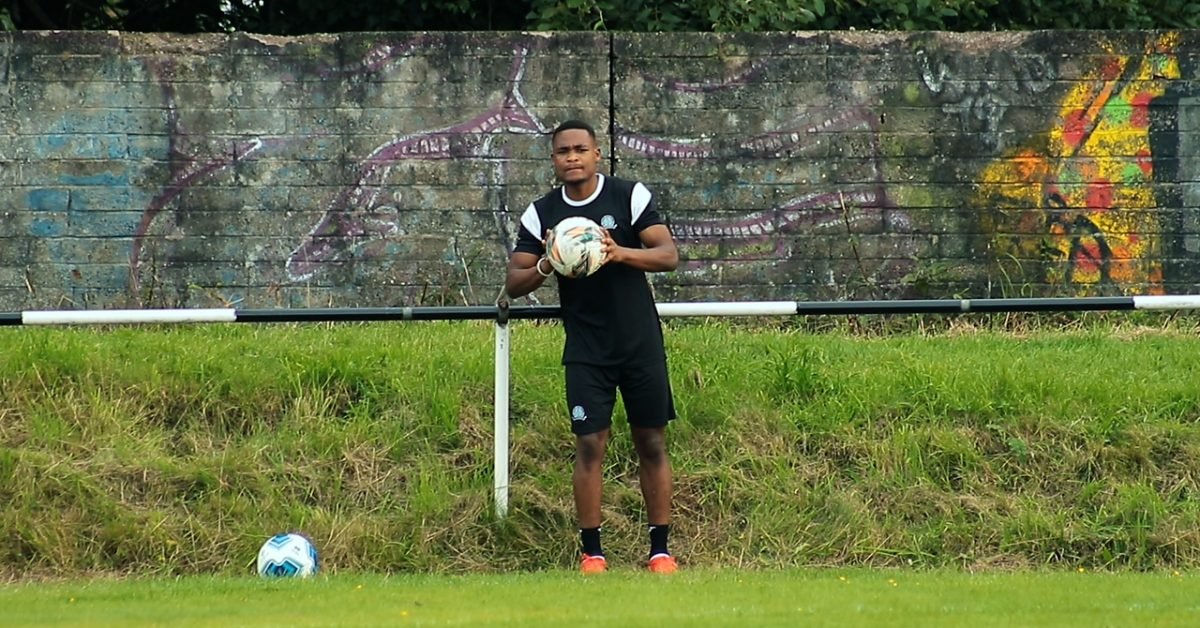
You want to master your soccer throw-ins, don’t you? As the long throw coach, I’ll show you how. I know you’ve seen those statistics – throw-ins occur, on average, 44 times per match, accounting for roughly 5% of all passes in professional football. And while players hit a teammate 81% of the time, teams only hold onto possession in about 60% of those instances. My advice? Short throws, under 10 yards, are your safest bet, boasting a success rate over 90%. I’m here to help you improve your game.
How to Add Distance and Accuracy to Your Soccer Throws
Getting your grip and stance perfect
I often see players just casually pick up the ball, but to get it right, you need a firm grip with spread fingers. You’ll also want a balanced stance, with your feet either on or behind the touchline. It really makes all the difference, trust me.
The secret to a smooth overhead motion
So, you’ve got your grip, but what about the throw itself? Expert Hubert Vogelsinger suggests using one foot behind the other for counterbalance. This helps you get that one fluid movement, which is absolutely key for power and precision.
I remember trying to just throw it from a standing start and it was a disaster! You really need that counterbalancing foot, as Hubert Vogelsinger advises, to generate the momentum for a proper throw. It’s not just about strength; it’s about converting your body’s energy into that single, smooth action. And remember, you’re aiming for your teammate’s feet or head – depending on their skill set, naturally – and you should never lob the ball unless you are going for a long throw. That’s a common mistake I see, and it just gives the opposition too much time.
How to Add Distance and Accuracy to Your Soccer Throws
Want more distance? It’s all in the core
Only a tiny fraction of throws – just 13% – actually travel over 30 yards, but you can definitely join that elite group. I’ve found it’s all about really engaging your core and shoulders, pulling your head, neck, and trunk back. Then, it’s a powerful thrust forward, shifting your weight from your back foot to your front foot. A little step or dragging your back foot keeps that momentum going, perfectly legal too!
Why you need to use your whole body
Throwing a football isn’t just an arm thing, is it? You’ve got to use your entire body, from your toes right up to your fingertips, to get that maximum power and really launch the ball. It’s about generating force through your whole kinetic chain.
Strengthening your power with medicine balls
Building explosive power is absolutely key for those long throws, and medicine balls are a fantastic tool for this. They help you develop the strength in your core and shoulders that I was just talking about.
I’ve seen firsthand how incorporating medicine ball drills can seriously upgrade your throwing game, helping you generate the kind of force needed to send the ball sailing over 30 yards. Think about exercises like rotational throws or overhead slams; they mimic the exact movements you need for a powerful throw. These aren’t just about big muscles, they’re about training your body to work as one cohesive unit, transferring that energy efficiently from your core right through to your fingertips.
Why throwing backwards is seriously underrated
Does throwing backwards seem a bit daft? It might sound counterintuitive, but my experience as a long throw coach tells me it’s a winner. Backwards throws boast a 99.5% first-contact success rate and an incredible 83.5% possession retention – those numbers speak for themselves, don’t they?
The stats that prove forward throws are risky
Are you really getting the most out of your forward throws? Lateral throws lead to a shot on goal 12.2% of the time, which is almost double the 6.6% you get from a forward throw. That’s a huge difference in creating scoring chances, isn’t it?
Why timing is everything for keeping the ball
Do you know exactly when to release that throw? The best time to throw is exactly five seconds after the ball goes out. This isn’t just a random number; it’s about giving your team the best chance to regain control.
I’ve seen so many players rush their throws, or worse, wait too long, losing that precious window of opportunity. Most throws, I’ve found, fall somewhere between 7 and 25 yards, and nailing that five-second mark gives your teammates the chance to get into position and receive the ball cleanly. It’s a small detail, but it makes a massive difference to possession retention and setting up your next attack – and that’s what I, as your long throw coach, want you to master.
Don’t get called for a foul: Rules you need to know
Common myths about offside and scoring
Many players wonder about offside from a throw-in, don’t they? The good news is you can’t be offside from a throw-in, which is a huge advantage! But here’s the kicker: you can’t score a goal directly from a throw-in. You’ll need a teammate’s touch first.
How to avoid a foul throw call
Avoiding a foul throw is simpler than you might think. Just make sure you use both hands on the ball and keep both feet on the ground when you release it. Don’t touch the ball again until another player does.
I’ve seen so many promising attacks stopped dead because of a foul throw, and it’s just frustrating, isn’t it? Seriously, you need to ensure that when you’re taking that throw-in, your feet are firmly planted; lifting your feet off the ground is a definite no-no and will get the whistle blown every time. And look, it might seem obvious, but using only one hand is also illegal – you need that two-handed grip for a proper, legal throw. Plus, and this is one people sometimes forget, the thrower touching the ball again before someone else does is a foul. Oh, and here’s a big one that catches players out: the goalkeeper isn’t allowed to catch a throw-in from their own teammate. That’s a direct free-kick to the opposition, so be mindful of where you’re throwing it!
Training drills that’ll make you a pro
So, you’re wondering how to take your throw-ins from decent to game-changing, aren’t you? Well, I’ve got some cracking drills that’ll get you there. You’ll want to focus on both power and precision, because what’s the point of a long throw if it goes straight to the opposition?
Target practice for better accuracy
Do you ever just launch the ball and hope for the best? Stop that! I always tell players to use target practice with cones to really improve accuracy. You can’t beat hitting those tight spots, can you?
Partner exercises and specialised coaching
How do you make sure your fantastic throw-ins actually connect with a teammate? You absolutely need to work with partners to improve communication, it’s non-negotiable.
I’ve seen it time and again, even elite teams are now hiring specialised throw-in coaches, like the brilliant Thomas Gronnamark, to master these set pieces. It just shows you how much impact a well-executed throw-in can have, doesn’t it? And for those deep entries, using heavier balls in training can genuinely help build the specific arm and shoulder strength needed – it’s a real game-changer.
Smart tactical plays to mess with the defence
You can really mess with the opposition’s heads by using some clever tactical plays. I find that decoy runs and fake movements are brilliant for confusing defenders and creating space, which is what we all want, isn’t it? Just remember to be aware of any future time limits on these restarts, because rules can change.
Using decoy runs to create space
Creating space is key, and I often tell my players to use decoy runs and fake movements to achieve this. Imagine the chaos you can cause in their backline, pulling defenders out of position and opening up lanes for your teammates. It’s all about deception, isn’t it?
Why you should avoid throwing near your own goal
Seriously, I can’t stress this enough – be very careful throwing the ball within 20 yards of your own goal. You’re just asking for trouble there, as you’re far more likely to lose possession in such a dangerous area. It’s a risk I just wouldn’t take, especially when there are better options.
I always advise against throws near your own goal because the statistics just don’t lie – you’re more likely to lose possession in that critical 20-yard zone. Think about it; a misplaced throw, a quick interception, and suddenly the ball’s in your net. It’s a high-risk, low-reward situation, and as your long throw coach, I want you playing smart, not gambling away possession so close to disaster.
Final Words
Conclusively, I am the long throw coach and I can tell you that mastering your throw-in isn’t just about strength, it’s about making it a tactical weapon for your team. You will find focusing on core strength and having a proper grip are key, and smart choices, like a lateral pass, really boost your team’s possession. That means more scoring opportunities for you, doesn’t it?