
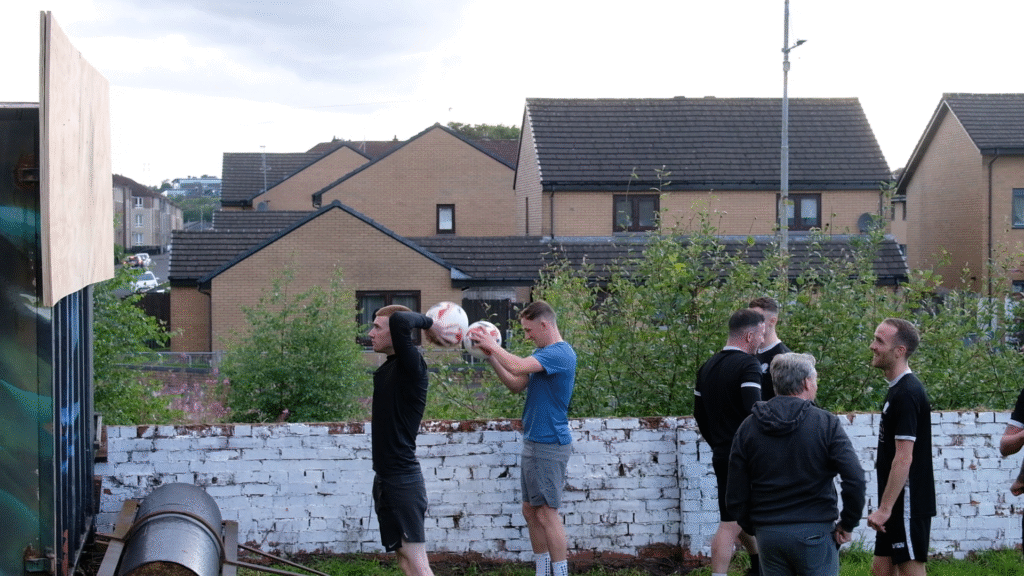
Just a few adjustments can significantly enhance your long throw consistency in football. In this post, I will share five effective steps that can transform your technique, allowing you to achieve greater distance and accuracy. By focusing on proper grip, body positioning, and follow-through, you can elevate your game and contribute more effectively to your team. Implementing these simple strategies can lead to noticeable improvements, ensuring that your throw becomes a reliable asset on the pitch.
Key Takeaways:
- Focus on your grip and hand positioning for better control of the ball.
- Develop a consistent throwing motion by practising your technique regularly.
- Utilise your entire body, engaging your legs and core for added power.
- Work on your footwork to ensure a strong base before releasing the ball.
- Evaluate your throws through video analysis to identify areas for improvement.
The Mechanics of a Powerful Long Throw
Mastering the mechanics behind a powerful long throw is important for consistency. It involves optimising your body movement, foot placement, and follow-through. Each element plays a pivotal role in generating both distance and accuracy. By focusing on these aspects, I can enhance the effectiveness of my throws, allowing for improved team play and reduced errors in critical situations.
Body Alignment and Posture
Maintaining proper body alignment and posture directly influences the throw’s power. Start with your feet shoulder-width apart, and ensure your weight is evenly distributed. An upright posture allows for a smooth transfer of energy, enabling you to channel your strength effectively through the throw. Small adjustments, like keeping your shoulders square, can dramatically enhance throw accuracy.
The Role of Foot Placement
Foot placement is fundamental for maximising the energy transfer during a throw. Positioning your non-throwing foot slightly ahead provides stability while creating a strong base. This alignment aids in maintaining balance as you follow through, which significantly affects both distance and precision. A solid foundation allows for an explosive thrust from your lower body, propelling the ball further.
When I focus on my foot placement, I ensure that my non-dominant foot points towards the target, allowing me to generate more torque during the release. This orientation plays a major role in directing the throw accurately. I also pay attention to how my back foot pushes off the ground; this explosive movement contributes significantly to the overall force of the throw. Practising this element regularly has consistently increased my throwing distance, making it a vital part of my routine.
Mastering Grip and Release Techniques
Effective grip and release techniques significantly influence the distance and accuracy of your long throw. I focus on developing a consistent grip that allows for flexibility while ensuring control as I prepare for the throw. By honing these skills, you can enhance your overall throwing performance and achieve improved outcomes on the pitch.
Finding the Optimal Grip
The optimal grip involves holding the ball securely yet lightly, with your fingers splayed comfortably over the surface. I usually ensure that my index and middle fingers are positioned along the seam, while the thumb supports from underneath. This balanced grip allows for a controlled release while maximising power.
Timing Your Release for Maximum Distance
Maximising distance lies in your timing of the release. I always aim to release the ball just as my body weight shifts forward, allowing my momentum to carry through the throw. Synchronising this movement can add significant propulsion to your throw, making a noticeable difference in distance.
For optimal timing, I visualise the moment just before the release, focusing on transferring my weight from the back foot to the front. As I approach the throwing motion, I maintain a sense of rhythm, initiating the throw just as my lead foot strikes the ground. This timing enables me to harness the kinetic energy built up from my legs and core, propelling the ball further. A minor adjustment in timing can be the difference between a few yards gained or lost, so taking practice throws while consciously adjusting the release timing can yield substantial results.
Harnessing Core Strength for Enhanced Stability
Your core is the foundation of your throwing power and stability. Strengthening the core helps maintain balance during the throw, allowing you to deliver the ball more consistently. A strong core mitigates external forces and enhances your ability to generate power from your lower body, translating into longer throws. Focus on developing a robust core to improve your overall throwing technique.
Key Exercises to Boost Core Power
Incorporating exercises like planks, medicine ball throws, and bicycle crunches can significantly enhance your core strength. I often include stability ball exercises to engage multiple muscle groups, promoting functional strength. By regularly implementing these workouts, you’ll notice improved stability in your throwing motion, leading to greater control and distance.
The Importance of Balance in Throwing
A strong long throw relies heavily on balance. Without proper balance, you risk losing power and accuracy. Your throwing motion requires a seamless transition from the wind-up to release, which is only achievable when your centre of gravity remains stable. This stability allows for greater energy transfer and enhanced propulsion of the ball.
Focusing on balance techniques, such as single-leg stands and dynamic stretches, will help stabilise your lower body during your throw. I often find that working on balance not only improves my throwing consistency but also reduces the risk of injury. Engaging your stabiliser muscles ensures that you maintain control even in high-pressure situations, making your throws more reliable in matches.
Practising Consistency through Drills
Drills focused on consistency can transform your throwing ability by reinforcing proper mechanics and muscle memory. Incorporate varied exercises that challenge both your technique and mental focus. Set aside dedicated time for these drills, ensuring repetition and gradual progression in difficulty. The more you practice, the more instinctive your actions will become, leading to enhanced performance during matches.
Targeted Drills to Improve Accuracy
Engaging in targeted drills specifically designed to enhance accuracy can yield significant results. Use cones or targets set at various distances to refine your precision. By focusing on hitting a smaller target, such as a cone or a marked area, I enhance my eye-hand coordination and boost the chances of successfully delivering accurate long throws during matches.
Incorporating Game Situations for Real-World Application
Integrating game-like scenarios into your training allows for a seamless transition of skills to competitive play. Practise long throws under pressure, simulating match conditions, such as time constraints and defensive pressure. This not only sharpens your concentration but also enhances your decision-making skills, preparing you to execute long throws confidently during an actual game.
For effective incorporation of game situations, organise practice matches where you specifically focus on utilising long throws. Position teammates in various strategic locations, simulating real game dynamics. Vary the distance and pressure applied by defenders to replicate actual match scenarios. Over time, this adaptability will enhance your ability to execute throws under stress, directly translating to improved performance on the pitch. As you rehearse, your muscle memory will strengthen, empowering you to make decisive plays when it matters most.
Mental Preparation: The Mind-Body Connection
Success in long throwing relies heavily on mental preparation, forging a strong mind-body connection. Visualising successful throws and feeling the associated emotions helps to create a confident throwing state. This mental rehearsal allows your brain to establish neural pathways that translate to physical execution, ensuring that your muscles respond effectively when it matters most.
Building Confidence through Visualization
Visualisation plays a key role in enhancing your long throw consistency. By vividly imagining a successful throw, you embed a sense of confidence that translates into your performance. Picture every detail—from your stance to the release—and feel the satisfaction of a well-executed throw. This process builds belief in your ability to replicate those successful moments during actual gameplay.
Strategies to Maintain Focus Under Pressure
Maintaining focus under pressure is vital for executing long throws. Techniques such as controlled breathing and positive self-talk can centre your mind amidst chaos. Establishing a routine before your throw can also provide a calming effect, promoting concentration. Visual cue systems, such as identifying a target point, further enhance your focus, ensuring that distractions fade away.
To effectively manage pressure, harness specific techniques like *box breathing*, which involves inhaling for a count of four, holding for four, and exhaling for four. This method reduces anxiety and helps sharpen your focus. Incorporating *pre-throw rituals* can create a sense of familiarity, assisting in anchoring your thoughts. Additionally, picturing a successful outcome before each throw solidifies confidence and redirects your attention away from external pressures. By implementing these strategies, you can maintain composure and deliver your best under even the most challenging circumstances.
To wrap up
With this in mind, I find that by implementing these five simple steps, you can enhance your long throw consistency in football. Focus on your technique, strengthen your upper body, practise regularly, develop a strong mindset, and analyse your throws. These strategies will not only improve your performance but also boost your confidence during matches. Commit to this process, and you’ll see a significant difference in your throwing ability on the pitch.