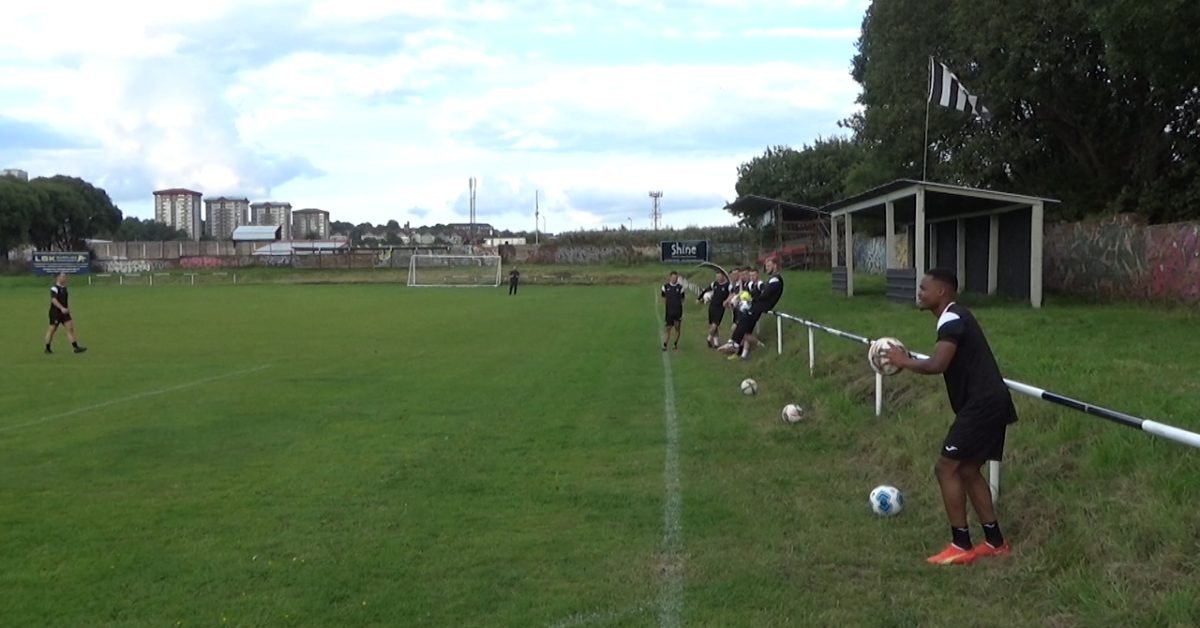
If you’ve ever launched a throw-in and watched it fall well short of where you wanted it to go, you’re not alone. For most players, the throw-in is the most neglected skill in football. It gets no training time, no coaching attention and no respect — until it costs your team possession at a critical moment.
The good news is that a short throw-in is almost always fixable. In this guide we’ll break down exactly why your throw-in is falling short and give you a step-by-step plan to add serious distance — fast.
Why the Throw-In Matters More Than You Think
In a typical 90-minute football match, there are around 40 to 50 throw-ins. That’s 40 to 50 opportunities to maintain possession, build pressure and create chances — or hand the ball straight back to the opposition.
Liverpool FC demonstrated just how significant throw-ins can be. In the 2017/2018 season they ranked 18th in the Premier League for throw-in possession under pressure. After introducing throw-in specialist Thomas Gronnemark, they jumped to 1st in 2018/2019 — a transformation that contributed directly to one of their most successful seasons in decades. That’s the difference proper throw-in training makes at the highest level.
A player with a long, accurate throw-in is a genuine tactical weapon. Think of players like Rory Delap, whose throw-ins were essentially corners from the touchline, causing chaos in opposition defences and leading directly to goals. At grassroots level, a player who can reach the six-yard box from the touchline gives their team an enormous advantage.
The problem is that most players have never been taught how to throw properly, and they’ve certainly never trained it. That’s exactly why even a small amount of targeted training can produce dramatic results.
The 5 Reasons Your Throw-In Is Short
1. You’re Not Using Your Whole Body
Most players throw almost entirely with their arms. They grip the ball, pull it back behind their head and push it forward — and wonder why it doesn’t go very far. A powerful throw-in involves your entire body working together.
The movement should start from the ground up. Your legs drive the initial power, your core transfers it and your arms and wrists finish the movement with a snapping action. Without that full body involvement you’re leaving most of your potential distance on the table.
Your grip matters too. Create a W shape with your hands behind the ball — not too wide and not too close together. Your thumbs should be almost touching at the back of the ball. Where you position your hands also affects the flight — hands underneath the ball creates backspin as you release, which can actually work against distance.
2. Your Wrist Snap Is Weak or Missing
The wrist snap — sometimes called the “Snap” phase — is the most important and most overlooked part of the throw-in. It’s the final flick of the wrists as the ball leaves your hands that generates the last burst of speed and determines the trajectory of the throw.
Without a strong wrist snap your throw will be flat and short. With it, the ball carries further, stays on a better arc and is far harder for defenders to deal with. Most players have never specifically trained their wrist snap — which is why training it produces such rapid improvements.
3. You Lack Upper Body and Core Strength
A throw-in is an explosive movement that demands real strength from your shoulders, arms, core and back. If those muscles aren’t strong enough to generate and transfer power efficiently, your throw will always be limited by your physical capacity.
The good news is that targeted throw-in specific strength work builds quickly. You don’t need to spend months in the gym — the right resistance training directly applied to the throwing movement produces noticeable improvements in a matter of weeks.
4. Your Run-Up Isn’t Working For You
A good run-up generates momentum that can be transferred directly into the throw. But most players either don’t use a run-up at all or use one that’s too fast, too long or poorly timed — which actually kills the power rather than adding to it.
The ideal run-up is controlled, rhythmic and timed so that your plant foot hits the ground at exactly the moment you begin the throwing motion. For a longer throw you’ll need a longer run-up to generate more momentum. For a shorter possession throw, a shorter or no run-up gives you more control. Get that timing right and you add yards without any extra effort.
5. You’ve Never Actually Trained It
This is the biggest reason of all. Football training sessions almost never include throw-in practice. Players spend hours working on shooting, passing and heading — but throw-ins? Never.
The result is that most players throw at whatever level their natural ability allows and never improve. But the throw-in is a trainable skill. With the right method and consistent practice, almost any player can add significant distance in a short period of time.
How to Fix a Short Throw-In
Step 1: Master the Technique First
Before you worry about distance, make sure your technique is correct. A technically sound throw-in looks like this:
- Both hands behind the ball with thumbs almost touching — create a W shape
- Ball taken back behind the head — not just to the back of the neck
- Arch your back on the way back to generate more power on the follow through
- Feet shoulder-width apart or in a staggered stance
- Bend at the back and drive forward from the hips
- Finish with a strong wrist snap as the ball is released
- Both feet must remain on or behind the touchline throughout
Get this foundation right before moving on to power training. Bad technique with more power just means throwing incorrectly further.
Step 2: Train With Resistance
The most effective way to build throw-in specific power is resistance training using a heavy ball. By training with a ball that is significantly heavier than a match ball, you force your muscles to work harder to produce the same movement — building explosive strength directly in the muscles you use for throwing.
The key is that the resistance training must replicate the exact movement of a throw-in. This is why the Long Throw Coach system uses a standard football filled with water rather than a medicine ball or a weighted ball of a different size and shape. A football filled with water weighs around 5kg but retains the same size, shape and feel as a match ball — meaning every repetition in training is directly transferable to a game situation.
When you go back to throwing a standard ball after training with a 5kg football, it feels effortless. That contrast is where the improvement comes from.
Step 3: Work on Your Wrist Snap Specifically
Isolate the wrist snap and train it separately. Hold the ball in both hands, arms extended in front of you, and practice snapping your wrists forward to release the ball. You’ll feel exactly which muscles are involved and you can build strength in that specific movement pattern.
Do this with a heavy ball and a standard ball alternately. The heavy ball builds strength, the standard ball builds speed. Together they build power.
Step 4: Train Twice a Week Consistently
You don’t need to train every day to see results. Two sessions per week of focused throw-in training is enough to produce noticeable improvement within two weeks. Consistency matters far more than volume — two focused sessions a week for a month will do more than daily training for a week followed by nothing.
Most players who follow a structured throw-in training programme report adding 5 to 10 yards within the first two weeks. Some add more, depending on their starting point and how consistently they train.
Step 5: Measure Your Progress
Set up two cones — one at your starting throw distance and one at your target distance. Measure every session. Seeing the ball reach further week by week is the best motivation to keep going, and it gives you objective proof that the training is working.
How Long Does It Take to Improve Your Throw-In?
Most players see meaningful improvement within two weeks of consistent training. The initial gains come quickly because you’re building strength in muscles that have never been specifically trained before — there’s a lot of untapped potential to unlock early on.
After the initial improvement, progress continues but at a steadier pace. Players who commit to regular training over a full pre-season or a few months can achieve throw-in distances that put them in a completely different category to most grassroots players.
A Telegraph journalist who had never trained his throw-in before added 10 yards in a single session using the Long Throw Coach system. That’s an extreme example, but it shows how quickly untrained players can improve when they apply the right method.
Throw-In Training Drills You Can Do Today
You don’t need a full training session to start improving. Here are three drills you can do with a partner or on your own:
Heavy Ball Repetitions
Fill a standard football with water using the Long Throw Coach Tap Adapter until it reaches approximately 5kg. Perform 10 throw-in repetitions focusing on technique and follow through. Rest for 60 seconds. Repeat three times. Then switch to a standard ball and feel the difference immediately.
Wrist Snap Isolation
Stand with your arms extended in front of you holding the ball. Without moving your arms, snap your wrists forward to release the ball as far as you can. Do this 15 times with a heavy ball and 15 times with a standard ball. This builds the specific snap strength that adds distance.
Cone Distance Challenge
Place a cone at your current maximum throw distance. Each session try to reach that cone and then push it one step further. Measuring your progress session by session keeps training focused and shows you exactly how far you’ve come.
The Long Throw Coach System
The Long Throw Coach Tap Adapter is designed specifically to make heavy ball training as simple and effective as possible. It fits any standard household tap and allows you to fill a standard football with water in minutes, turning it into a 5kg resistance training tool.
Combined with the Long Throw Coach training video library — which covers technique, the wrist snap, resistance drills and strength exercises — it gives you everything you need to add serious distance to your throw-in at home, without a gym or a coach.
The system has been used by 800+ players at all levels, from grassroots Sunday league to professional clubs including Celtic FC, Stoke City, Plymouth Argyle and Club Brugge. It was featured in The Telegraph after journalist Sam Dean flew from London to Glasgow to try it — and added 10 yards to his throw in a single session.
The 30-day results guarantee means there’s no risk. If you follow the training and don’t see an improvement in your throwing distance, we’ll personally review your technique and fix it — free.
Get the Long Throw Coach Tap Adapter + Training Videos — £29.99 with free UK delivery.
Frequently Asked Questions
Why is my throw-in so short?
The most common reasons are throwing with arms only instead of using your whole body, a weak or missing wrist snap, lack of upper body and core strength, poor run-up timing and simply never having trained it. All of these are fixable with the right technique and resistance training.
How do I get a longer throw-in in football?
The fastest way to add distance to your throw-in is heavy ball resistance training using a football filled with water. Training with a 5kg ball forces your muscles to work harder, and when you switch back to a standard ball the improvement in distance is immediate and significant.
How long does it take to improve your throw-in distance?
Most players see noticeable improvement within two weeks of training twice a week. The gains come quickly early on because throw-in specific muscles are usually completely untrained. Some players add 5 to 10 yards within the first two weeks.
Can any player improve their throw-in?
Yes. The throw-in is a skill and like any skill it responds to training. Players of all ages and abilities can add significant distance with the right method. The Long Throw Coach system is suitable for players aged 11 and above.
Is a medicine ball good for throw-in training?
A medicine ball builds general strength but it doesn’t replicate the exact movement of a throw-in because it’s a different size and shape to a football. Training with a water-filled football is more effective because the size and feel is identical to a match ball, meaning the strength you build transfers directly into your game.
Why did Liverpool improve so much with a throw-in coach?
Liverpool went from 18th to 1st in the Premier League for throw-in possession under pressure after introducing throw-in specialist Thomas Gronnemark. The improvement came from players learning proper technique, movement patterns and decision making on throw-ins — proving that throw-in training has a measurable impact at the highest level of the game.
Summary: Why Your Throw-In Is Short and How to Fix It
- Most players throw with their arms only — use your whole body
- The wrist snap is the most important and most undertrained part of the throw
- Upper body and core strength directly limits your throwing distance
- Your run-up timing could be killing your power rather than adding to it
- The throw-in is a trainable skill — most players have simply never trained it
- Heavy ball resistance training with a football is the fastest way to add distance
- Two sessions per week is enough to see results within two weeks
- Liverpool FC proved at the highest level that throw-in training produces measurable results
Stop wasting throw-ins. With the right training, you can turn one of football’s most neglected skills into one of your biggest weapons.