
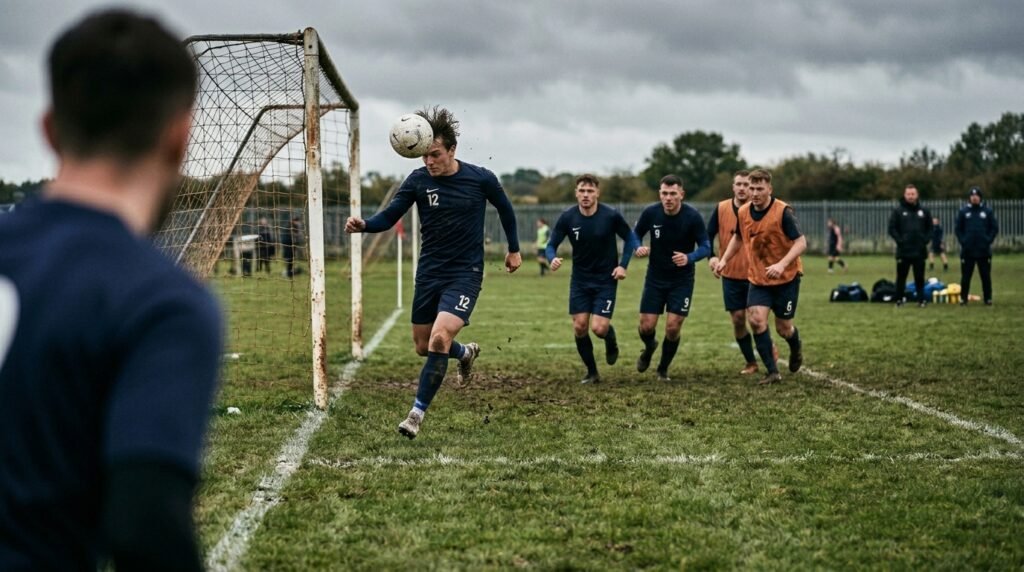
Corner kicks are a golden opportunity to unlock a stubborn defence. At grassroots level, well-drilled corner kick routines can turn set pieces into consistent scoring chances. By combining simple tactical movements, clear roles and regular practice, coaches can equip their teams with routines that work under pressure.
Tactical Principles Behind Corner Kick Routines
Effective corner kick routines rely on exploiting space and creating confusion among defenders. A key principle is to overload one area of the penalty box, typically the near or far post, forcing defenders to make split-second decisions. Another tactic is to use short corners to stretch the defence horizontally, opening up crossing lanes or shooting opportunities from the edge of the box. By varying delivery height and spin, the kicker can further disrupt the opponents’ marking structure.
Common Mistakes to Avoid
One frequent error is predictable positioning. If attackers always congregate at the near post, the defence will ignore other areas. Encourage players to shift positions until the last moment. Another mistake is poor delivery: kicking the ball too close to the goalkeeper or overhit crosses into no-man’s-land. Practising consistent technique—both in-flight accuracy and appropriate pace—is crucial. Finally, avoid static routines. Players should adapt movements in reaction to what the defending side gives them, rather than running rehearsed patterns regardless of opponent shape.
Coaching Drills for Corner Kick Routines
Drills help embed routines and improve decision-making under pressure. Each of the following exercises takes 15–20 minutes and needs minimal equipment: balls, cones, and small goals or markers.
Near Post Flick-On Drill
Set-up: Place four attackers in a line at the edge of the six-yard box, two defenders marking them. Kicker stands at the corner flag.
Instructions:
1. Kicker aims a low-driven cross to the near post.
2. First attacker runs from the line to flick the ball on with their head or foot.
3. Remaining attackers time their runs to arrive at the penalty spot.
Coaching points: Emphasise timing of the flick and encourage second-phase attackers to be ready for the rebound.
Zone Marking Drill
Set-up: Divide the box into three vertical zones (near post, central, far post) using cones. Assign one attacker and one defender per zone.
Instructions:
1. Kicker alternates deliveries to each zone.
2. Attackers focus on attacking the front shoulder of the defender to shield them from the ball.
3. Defenders must clear within their zone before the rebound arrives.
Coaching points: Highlight the importance of spatial awareness and communication between defenders and attackers.
Short Corner Combination
Set-up: Place two cones five metres apart on the touchline, closer to the corner flag. Two attackers stand by the cones; the kicker starts wider.
Instructions:
1. Kicker plays a short pass to the first attacker.
2. First attacker returns the ball, then immediately laps around for a return pass.
3. Second attacker sprints into the box, looking for a cut-back or cross.
Coaching points: Stress quick one-touch play, movement angles and scanning for defenders to exploit gaps.
Decoy Runner Practice
Set-up: Three attackers and two defenders in the box.
Instructions:
1. Kicker delivers an outswinging cross towards the penalty spot.
2. Attacker A makes an obvious run to the near post to draw two defenders.
3. Attacker B times a late run to the far post, aiming to meet the cross.
Coaching points: Teach attackers to use body shape to guide defenders away and to run on the shoulder at pace.
Why These Routines Work in Matches
Grassroots defences often lack the organisation and communication of higher levels. By introducing movement variety—such as near-post flicks, far-post decoys and short corners—you force opponents to constantly adjust. This uncertainty opens gaps for late runs or direct headers. Moreover, practising these routines builds confidence: players know their roles and trust the delivery, reducing panic under match-day pressure. Regular repetition also improves set-piece discipline, so players are more likely to find space and less likely to stray offside.
Key Takeaways
– Define clear roles: assign specific zones or responsibilities to each attacker.
– Vary routines: alternate near-post, far-post and short corners to keep defences guessing.
– Emphasise delivery quality: the success of corner kick routines hinges on accurate, well-paced crossing.
– Drill under pressure: simulate defenders and add a time limit to encourage quick decision-making.
– Review and adapt: analyse match footage or feedback to refine your routines based on what works.
By integrating these corner kick routines into your training sessions, grassroots teams can turn set pieces into a reliable attacking weapon. Regular practice, combined with tactical understanding and clear coaching cues, will make the difference between a wasted corner and a match-winning goal.