
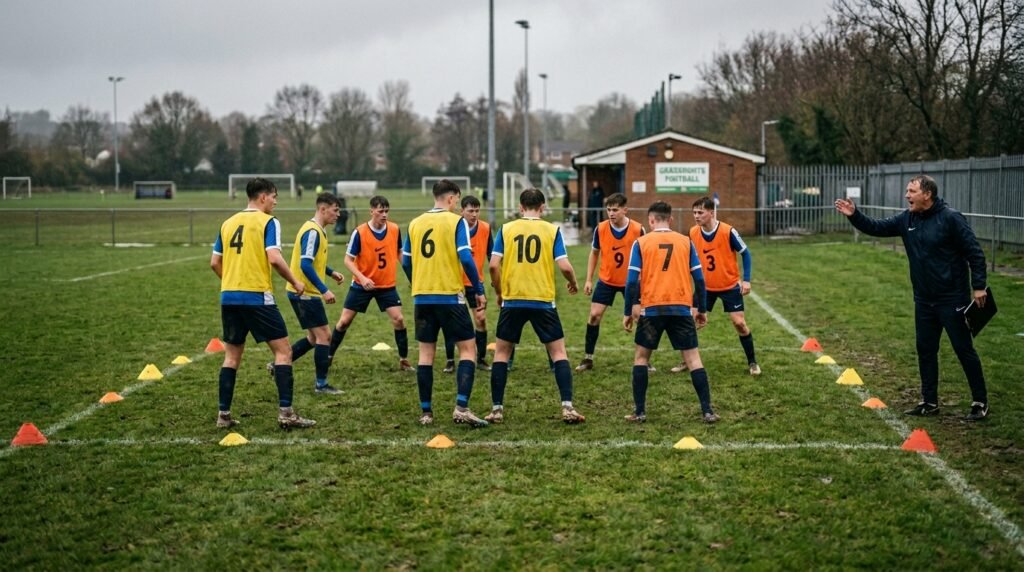
Every grassroots coach faces the decision of how and where to set their defensive line. Two popular systems for containing opponents are the mid-block and the low block. Understanding the differences, benefits and potential pitfalls of each will help you select the right approach for your team’s strengths and the match context.
Tactical Explanation
The mid-block is a defensive shape that sits between the defensive third and midfield, aiming to compress space and force turnovers in the middle of the pitch. Teams using a mid-block maintain a high enough line to intercept passes, while still retaining cover behind the ball.
In contrast, the low block drops all outfield players into the defensive third, narrowing the goal-to-ball distance. This shape relies on collective discipline, clear communication and rapid counter-attacks once possession is regained.
Key Features of a Mid-Block
• Defensive line around halfway or slightly ahead of the penalty box
• Compact midfield to deny central passing lanes
• Active pressing triggers when the opponent enters specific zones
Key Features of a Low Block
• Defensive line close to the penalty area
• Narrow channels between defenders to force wide play
• Two banks of four (or similar) to block central penetration
Why It Works in Matches
Both systems aim to limit space and time for the opponent, but they achieve this in different areas of the pitch.
Mid-block:
• Compresses the playing area, making it harder for opponents to progress through midfield.
• Triggers pressing in pre-defined zones, allowing players to press as a unit.
• Offers balance between defence and attack; players can quickly transition to counter-attack.
Low block:
• Invites opponents to cross or play around, reducing central threats.
• Maximises defensive cover near the goal, increasing chances of blocked shots.
• Buys time for energy recovery and tactical organisation, useful late in games or against superior opponents.
Common Mistakes
Using either block incorrectly can expose your team. Be alert to these frequent errors:
• Line too high in a low block – leaves huge gaps behind defenders.
• Overcommitting players in the mid-block – creates space behind and invites through balls.
• Poor communication – when to shift line up or drop back must be clear.
• Fatigue – mid-block pressing demands high work-rate; drop intensity if legs tire.
• Uneven coverage – weak side overloads occur if players fail to shift together.
Coaching Drills
To instil both shapes, use small-sided drills that focus on positioning, communication and transitions.
Drill 1: Mid-Block Pressing Shape
Setup: 8v8 on a 60×40 yard grid, divided into thirds.
Procedure:
1. Attackers start in the central third, defenders form a 4-4 shape across the middle and defensive third.
2. On coach’s signal, attackers aim to carry the ball quickly into the attacking third.
3. Defenders must shift as a unit in the mid-block zone, pressing only within the central third.
4. If the ball leaves the mid-block zone or attackers break the line, defenders reset.
Coaching Points:
• Maintain compactness between lines.
• Wait for pressing triggers: bad touches, sideways passes.
• Communicate to shift left and right together.
Drill 2: Low-Block Organisation
Setup: 7v7 plus 2 neutral “fillers” on a 50×35 yard pitch.
Procedure:
1. Attacking team tries to build up from a goal-line start.
2. Defenders set up in two banks of three and four, covering central zones.
3. Fillers roam wide, forcing defenders to decide whether to press or hold shape.
4. Once the ball enters the penalty arc, defenders must hold their ground without diving into tackles.
Coaching Points:
• Keep narrow distances between defenders.
• Block passing lanes into the box.
• Anticipate switches of play; guide full-backs to stay compact.
Key Takeaways
• Mid-block vs low block both restrict opponent space but in different pitch areas.
• Choose mid-block when you want to press higher and counter quickly.
• Use low block to protect a lead, disrupt possession, or against stronger opponents.
• Communication and collective movement are vital in both systems.
• Regular practice drills will ingrain shape, timing and transitions.
FAQ
What is the main difference between a mid-block and a low block?
The mid-block defends around the halfway line or just ahead of the box, aiming to win the ball in midfield. The low block drops all players into the defensive third, reducing central space and inviting wide play.
When should a coach switch from a mid-block to a low block?
Switch when you’re protecting a lead, facing high-quality attackers, or want to tire opponents. A low block helps you conserve energy and defend deeper if your team is under sustained pressure.
How do I teach young players to maintain a low block under pressure?
Use small-sided games with clear defensive zones. Emphasise narrow distances between lines and simple verbal cues like “drop” or “flat”. Reward disciplined positioning over individual tackles.